
Quick summary of course *****************
Quick summary of course *****************
What This Course Covers
This course combines the following subjects:
• Phonics
• Reading
• Spelling
• Writing
• Grammar and Punctuation
• Literature
• Poetry and Memorization
• Art Appreciation and Art Instruction
Handwriting is not included in this course.
Items Needed for the Course
The Good and the Beautiful Products:
• Level 1 Course Book
• Phonics Cards
• Level 1 Reader (integrated with the course)
• Plenty of The Good and the Beautiful
Library books at your child’s level for personal reading, which is a part of the course. (Have your child take the reading level assessment at www.thegoodandthebeautiful.com/library, which is different from the course level assessment.)
Other Items:
• A three-ring binder to use as the child’s “My Book
of Stories and Writings” (This same binder can be used through all
course levels to keep the stories and writing assignments that the child
creates. Have the child create a cover to insert into the front of the
binder. The child will only create a few items for this binder in Level
1.)
• Items to have on hand that are used in various lessons:
• Blank white paper
• Personal whiteboard and marker
• Scissors, tape, glue, crayons, colored pencils
•
Optional: A plastic page protector (The child will use watercolor paint
on some of the pages. Some parents might like to have a plastic sheet
to put behind the page while the child paints.)
• Items for specific lessons:
•
Poster paints, watercolors, paint brushes, cotton swabs, index cards,
cotton balls, highlighter, pot, stirring spoon, pointer such as
straw/feather/craft stick, fly swatter, balloons
Reading/Comprehension Skills. Students use a flexible range of metacognitive reading skills in both assigned and independent reading to understand an author’s message. Students will continue to apply earlier standards with greater depth in increasingly more complex texts as they become self-directed, critical readers. The student is expected to:
Reading/Comprehension Skills. Students use a flexible range of metacognitive reading skills in both assigned and independent reading to understand an author’s message. Students will continue to apply earlier standards with greater depth in increasingly more complex texts as they become self-directed, critical readers. The student is expected to:
Reading/Comprehension Skills. Students use a flexible range of metacognitive reading skills in both assigned and independent reading to understand an author’s message. Students will continue to apply earlier standards with greater depth in increasingly more complex texts as they become self-directed, critical readers. The student is expected to:
Many of your lessons below have an internet link for you to click on.
When you go to the different internet pages for your lessons, please DO NOT click on anything else on that page
except what the directions tell you to. DO NOT click on any
advertisements or games. DO NOT click on anything that takes you to a
different website. Just stay focused on your lesson and then close that
window and you should be right back here for the next lesson. Okay?
The primary focal areas in Grade 6 are number and
operations; proportionality; expressions, equations, and relationships;
and measurement and data. Students use concepts, algorithms, and properties
of rational numbers to explore mathematical relationships and to describe
increasingly complex situations. Students use concepts of proportionality
to explore, develop, and communicate mathematical relationships. Students
use algebraic thinking to describe how a change in one quantity in
a relationship results in a change in the other. Students connect
verbal, numeric, graphic, and symbolic representations of relationships,
including equations and inequalities. Students use geometric properties
and relationships, as well as spatial reasoning, to model and analyze
situations and solve problems. Students communicate information about
geometric figures or situations by quantifying attributes, generalize
procedures from measurement experiences, and use the procedures to
solve problems. Students use appropriate statistics, representations
of data, and reasoning to draw conclusions, evaluate arguments, and
make recommendations. While the use of all types of technology is
important, the emphasis on algebra readiness skills necessitates the
implementation of graphing technology.
The primary focal areas in Grade 7 are number and
operations; proportionality; expressions, equations, and relationships;
and measurement and data. Students use concepts, algorithms, and properties
of rational numbers to explore mathematical relationships and to describe
increasingly complex situations. Students use concepts of proportionality
to explore, develop, and communicate mathematical relationships, including
number, geometry and measurement, and statistics and probability.
Students use algebraic thinking to describe how a change in one quantity
in a relationship results in a change in the other. Students connect
verbal, numeric, graphic, and symbolic representations of relationships,
including equations and inequalities. Students use geometric properties
and relationships, as well as spatial reasoning, to model and analyze
situations and solve problems. Students communicate information about
geometric figures or situations by quantifying attributes, generalize
procedures from measurement experiences, and use the procedures to
solve problems. Students use appropriate statistics, representations
of data, and reasoning to draw conclusions, evaluate arguments, and
make recommendations. While the use of all types of technology is
important, the emphasis on algebra readiness skills necessitates the
implementation of graphing technology.
The primary focal areas in Grade 8 are proportionality;
expressions, equations, relationships, and foundations of functions;
and measurement and data. Students use concepts, algorithms, and properties
of real numbers to explore mathematical relationships and to describe
increasingly complex situations. Students use concepts of proportionality
to explore, develop, and communicate mathematical relationships. Students
use algebraic thinking to describe how a change in one quantity in
a relationship results in a change in the other. Students connect
verbal, numeric, graphic, and symbolic representations of relationships,
including equations and inequalities. Students begin to develop an
understanding of functional relationships. Students use geometric
properties and relationships, as well as spatial reasoning, to model
and analyze situations and solve problems. Students communicate information
about geometric figures or situations by quantifying attributes, generalize
procedures from measurement experiences, and use the procedures to
solve problems. Students use appropriate statistics, representations
of data, and reasoning to draw conclusions, evaluate arguments, and
make recommendations. While the use of all types of technology is
important, the emphasis on algebra readiness skills necessitates the
implementation of graphing technology.
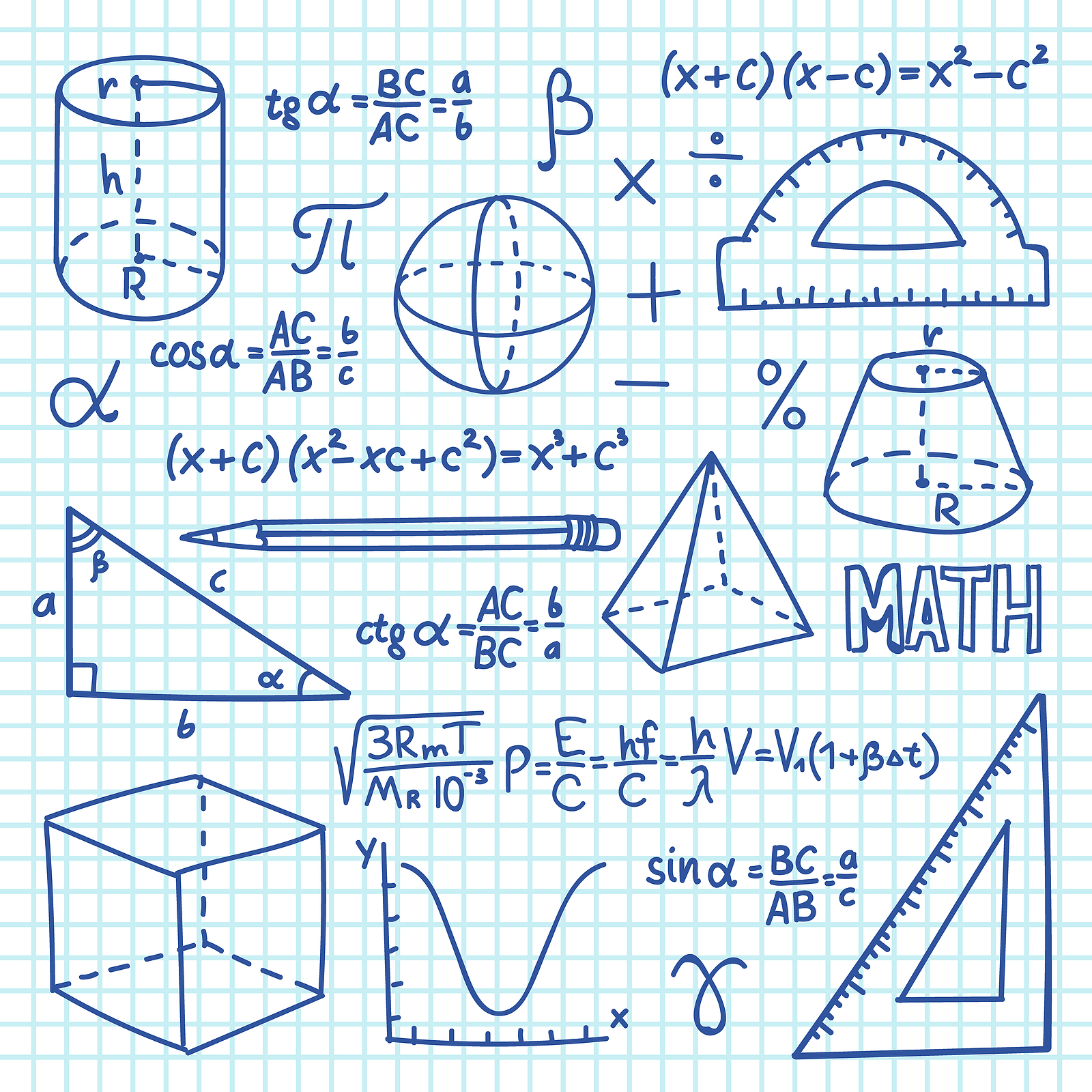
Geometry provides an opportunity to do geometric thinking and spatial reasoning. The student will study properties and relationships of all geometric figures relating to zero, one, two, and three dimensions and will be introduced to the relationship between geometry & other mathematics with other disciplines.
Grade: 9-12
Credit: 1
Prerequisite: Algebra I
Course Weight: 1.50

Algebra I provides the foundation concepts for high school mathematics. Students will be introduced to algebraic thinking and will use symbols to study relationships among quantities. They will be introduced to the relationship between equations and functions and will receive the tools for algebraic thinking as well as the training to use technology to model mathematical situations to solve meaningful problems. Foundations will be laid for all functions, with emphasis on linear and quadratic.
Students shall be awarded
one credit for successful completion of this course. This course is
recommended for students in Grade 8 or 9.
Credit: 1
Grade: 8 or 9
Prerequisite: 7th or 8th Grade Mathematics
Course Weight: 1.50
Students will
use a problem-solving model that incorporates analyzing given information,
formulating a plan or strategy, determining a solution, justifying
the solution, and evaluating the problem-solving process and the reasonableness
of the solution. Students will select appropriate tools such as real
objects, manipulatives, algorithms, paper and pencil, and technology
and techniques such as mental math, estimation, number sense, and
generalization and abstraction to solve problems. Students will effectively
communicate mathematical ideas, reasoning, and their implications
using multiple representations such as symbols, diagrams, graphs,
computer programs, and language. Students will use mathematical relationships
to generate solutions and make connections and predictions. Students
will analyze mathematical relationships to connect and communicate
mathematical ideas. Students will display, explain, or justify mathematical
ideas and arguments using precise mathematical language in written
or oral communication.
Students will
use a problem-solving model that incorporates analyzing given information,
formulating a plan or strategy, determining a solution, justifying
the solution, and evaluating the problem-solving process and the reasonableness
of the solution. Students will select appropriate tools such as real
objects, manipulatives, algorithms, paper and pencil, and technology
and techniques such as mental math, estimation, number sense, and
generalization and abstraction to solve problems. Students will effectively
communicate mathematical ideas, reasoning, and their implications
using multiple representations such as symbols, diagrams, graphs,
computer programs, and language. Students will use mathematical relationships
to generate solutions and make connections and predictions. Students
will analyze mathematical relationships to connect and communicate
mathematical ideas. Students will display, explain, or justify mathematical
ideas and arguments using precise mathematical language in written
or oral communication.

This course provides a study of the Texas Constitution and government, emphasizing political institutions including political parties, interest groups, the legislature, the governor, bureaucracy, judiciary, and local government.

Credit: 1
Level I courses
Grade: 8-12
Prerequisite: None
Level II courses
Grade: 9-12
Prerequisite: Level 1 courses
Course Weight: 1.50; Honors 1.70
Computer Science I DC will foster students’ creativity and innovation by presenting opportunities to design, implement, and present meaningful programs. Students will collaborate with one another, their instructor, and various electronic communities to solve problems presented throughout the course. Students will gain an understanding of the principles of computer science through the study of Python programming. Students will receive both high school and college credit
for this dual credit course.
Credit: 1
Grade: 9-12
Prerequisite: Algebra I
Course Weight: 1.75
Note: This course satisfies the state graduation requirement for a course under Languages other than English.

In this course, students gain knowledge and skills in economies and private enterprise systems, the impact of global business, marketing of goods and services, advertising, and product pricing. Students analyze the sales process and financial management principles. This course allows students to reinforce, apply, and transfer academic knowledge and skills to a variety of interesting and relevant activities, problems and settings in business, marketing, and finance.
Grade: 9-12
Credit: 1
Prerequisite: None
Course Weight: 1.50
Credit: .5
Grade: 11-12
Prerequisite: Two credits of state physical education credit
Course Weight: Unweighted

Grade: 9-12
Credit: .5
Prerequisite: Physical Exam
Course Weight: 1.50

Grade: 9-12
Credit: .5
Prerequisite: Physical Exam
Course Weight: 1.50

Are you ready to start your guitar journey? This class is for you! We'll
learn all the basic skills and build the muscles you need to play the
guitar with confidence. By the end of Grade 1, you'll know how to play
the eight essential open chords, the most common strumming patterns, and
loads of great songs!
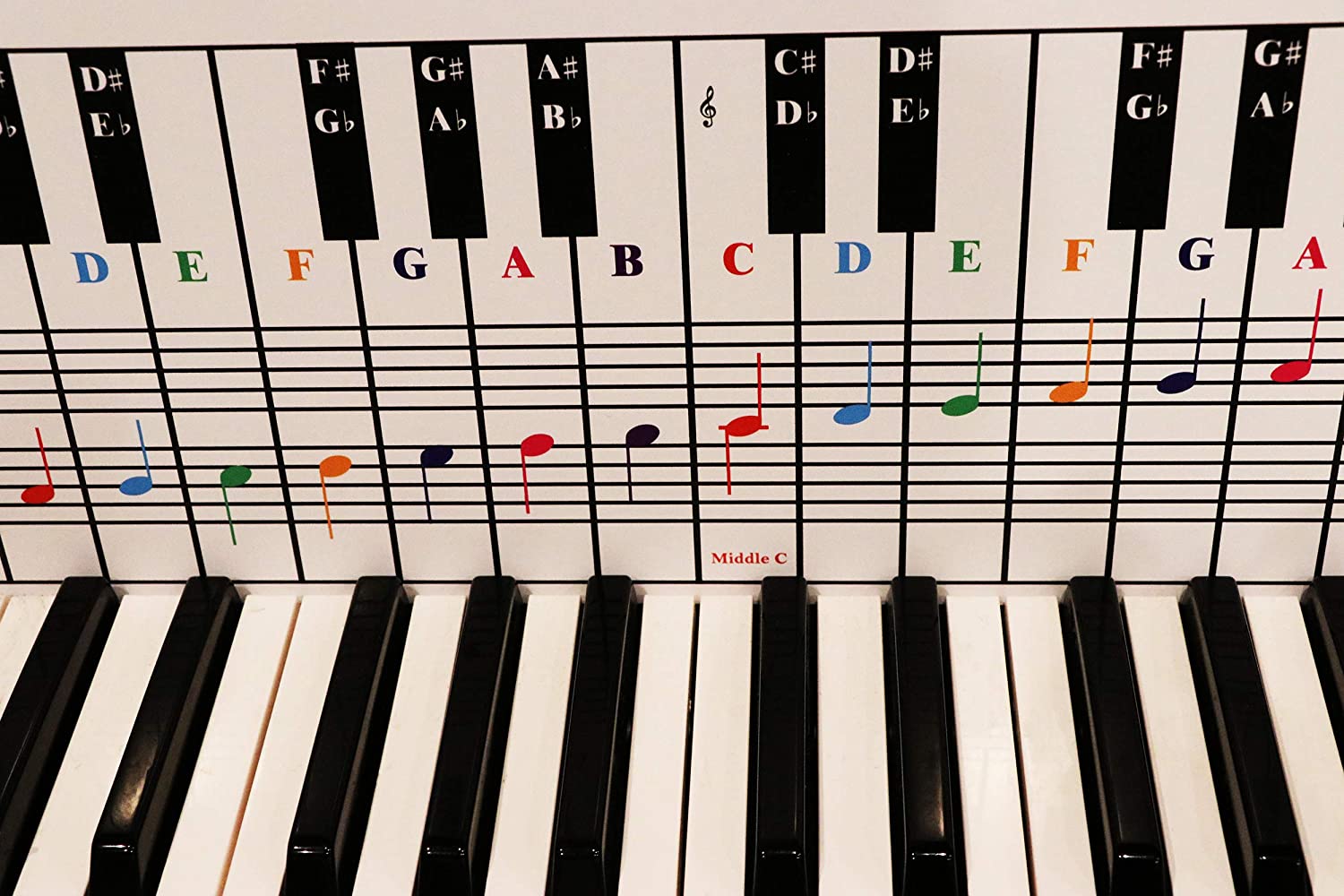
Music courses are offered on four different levels which all share the same four basic strands—perception, creative expression/performance, historical and cultural heritage, and critical evaluation. In music, students develop their intellect and refine their emotions, understanding the cultural and creative nature of musical artistry and making connections among music, the other arts, technology, and other aspect of social life. Through creative performance, students apply the expressive technical skills of music and critical-thinking skills to evaluate multiple forms of problem solving. A music fee is required for all choir and piano courses beyond level I.
In level I music courses, students will compare and contrast elements of music through literature selected for performance and/or listening. They will further their study by performing expressively, from memory and notation, a vivid repertoire of music representing styles from diverse cultures. Students will be given the opportunity to sight-read ensemble parts, to create a variety of musical phrases, and to listen to and classify music by style and/or by historical period. Students
will be expected to design and apply criteria for making informed judgments regarding the quality and effectiveness of musical performances.
Credit: 1
Grade: 9-12
Instrumental Ensemble I - Piano Prerequisite: None
Course Weight: 1.50

This course was developed by TABC and meets the training requirement for
both Basic and Advanced Human Trafficking. This course contains ten
(10) PDFs that you can download followed by five (5) course content
modules and a final exam. You will be required to take and pass the
final exam with a minimum score of 70% in order to successfully complete
this course and receive course credit.
If your course
window is compressed for any reason and the course content appears to be
cut off, click on the 4-way arrow in the upper right hand corner of the
window (appears next to the “Course” button) when viewing the content.
If you complete a module and received all of the completed stamps for all of the doors shown on the module menu page, click on the Module Section button in the scrolling left menu page and it should prompt the next module to unlock.

Learn all about deception indicators and improving communication. Also, learn the proper methods of testifying for maximum impact at hearings and trials. Includes audio re-enactments and commentary.
Ethics Hours: 2 hrs
Non-Ethics Hours: 2.25 hrs
Total Hours: 4.25 hrs
If you are a Texas process server who holds a current certification, license, or registration and needs continuing education, this course meets the continued education required by your state. This course is required as part of your continued education and mandatory training in order to renew your certification. This course must be taken before applying to the state for your renewal.
This course fulfills 4-hours of Texas process server continuing education training required for Process Servers by the Texas Judicial Branch Certification Commission (JBCC).
TXPRO 2201 covers:
TXPRO 2202 is also offered in addition to this course and covers many more aspects of the process service industry and gives 4 more hours of continuing education required by the State of Texas JBCC.
For more information please visit Texas Judicial Branch Certification’s website by clicking here.
At the end of this course, you should be able to:
This course will be available until December 31, 2027, once it is purchased. All training modules must be completed before the end of the specified time frame.
A certificate will be issued after passing this course and approval by JBCC of all modules for this course and will be available online for download.
Topics Covered
If you wish to become a Texas process server, this course meets the training required by your state. This course must be taken before applying to the state for your certification.
Applicants must complete a 7 hour course approved by the Commission (no more than) one year before filing their Process Server Application.
For more information please visit Texas Judicial Branch Certification's website by clicking here.
At the end of this course, you should be able to:
This course will be available until completed once it is purchased. All training modules must be completed before the end of the specified time frame.
A certificate will be issued upon completion and passing of all modules for this course and will be available online for download.
Return to Home Page
If you are a Texas-certified process server who holds a current certification from the Texas Judicial Branch Certification Commission (JBCC), this course is for you. The JBCC Program requires continued education for all license holders to renew their licenses. This course must be taken before applying to the State for your renewal.
This course fulfills 2-hours of Continuing Education training hours required for Process Server Professionals by the Texas JBCC Program.
For more information please visit JBCC Program's website by clicking here.
This course is designed for Texas professionals.
At the end of this course, you should be able to:
This course will be available for unlimited access once it is purchased. All training modules must be completed during the time frame in which the hours are needed to renew your certification.
A certificate will be issued upon completion and passing of all modules for this course and will be available online for download.

Become a non-commissioned security guard in Texas and elevate your career potential with our streamlined Level 2 Security Guard training course.
Fast-Track Learning:
This 6-hour, TDPS-approved course delivers the essential knowledge and skills you need to excel as an armed security guard. Invest in your future with focused training and become job-ready in record time.
Key Course Highlights:
Ideal Candidates:
This course is designed for ambitious individuals seeking Level 2 security guard certification. It's perfect for career advancement, veterans transitioning to civilian roles, and individuals seeking specific unarmed security positions.
Prerequisites for this course:
Disclosure:
Ready to unlock your potential?
Enroll in our Texas Level 2 Security Guard course today and take the fast track to a rewarding career in security. Contact us for more information and enrollment details.
NOTE: This course is the entire training required by the State of Texas.

CE Hours: 2.0
Ethics Requirement
If you are a security guard or private investigator that holds a current license from the State of Texas, this course is for you. The Private Security Program requires continued education for all license holders to renew their licenses. This course must be taken before applying to the state for your renewal.
This course fulfills the 2-hour ethics training and Continuing Education hours required for Private Security and Investigative Professionals by the Texas Department of Public Safety Private Security Program.
For more information, please visit the Texas Department of Public Safety Private Security Program's website by clicking here.

Hours: 2
Goal: To train the students in the theory and practice of the effective use of pepper spray.
Objectives:
Rev. 10-26-18

Initial training for individuals seeking to be licensed as a Private Investigator in Texas.
Note: This is not a regulated course.
This course is designed to give an introduction to the Texas Private Security Act and trains those for initial licensing as a Security Guard.
Pursuant to TAC 35.141 the Level II Training Course and test is required of all* non-commissioned security officers, commissioned security officers and personal protection officers. This training course must either be administered by a licensed Level III or Level IV Training School and taught by a licensed Level III or Level IV Instructor, or it may be administered by a licensed guard company and taught by a representative or employee of the company.
*Certain Peace Officers may be exempt per TAC 35.141(b)
Unarmed Security Guard Requirements in Texas

This purpose of this course is to provide an introduction to conducting protective intelligence and threat assessment investigations.
The course method is very simple:
Step 1 - Download and review the course material listed in "Resources" (it may open in a new window, depending on your computer settings).
Step 2 - Take the online quiz after you have reviewed the material. The quiz is open book/notes.
Stay safe!
If you are a security guard or private investigator who holds a current license from the State of Texas, this course is for you. The Private Security Program requires continued education for all license holders to renew their licenses. This course must be taken before applying to the state for your renewal.
This course fulfills 2-hours of Continuing Education training hours required for Private Security and Investigative Professionals by the Texas Department of Public Safety Private Security Program.
For more information please visit the Texas Department of Public Safety Private Security Program's website by clicking here.
This course is designed for Texas professionals.
At the end of this course, you should be able to:
This course will be available for unlimited access once it is purchased. All training modules must be completed during the time frame in which the hours are needed to renew your license.
A certificate will be issued upon completion and passing of all modules for this course and will be available online for download.
This orientation is given to make sure you have the necessary tools required to be successful with Emerald Shield Academy Online Courses. You will cover the requirements for this course and a set of rules that must be followed for security training online.
It’s important to know that even though he is registered, a man will not automatically be inducted into the military. In a crisis requiring a draft, men would be called in a sequence determined by random lottery number and year of birth. Then, they would be examined for mental, physical, and moral fitness by the military before being deferred or exempted from military service or inducted into the Armed Forces.
So long as you are eligible, you
will be able to register to vote in your county of residence to make
your voice heard in local, state and federal elections

The Texas License to Carry Certification course is a great way for you to learn the basics of pistol shooting from Texas DPS Certified License to Carry Firearms Instructor.
Course description: This course is designed for a minimum of four (4) hours, and a maximum of six (6) hours of classroom instruction, written examination, and proficiency demonstration. Material is provided in modules with specific amounts of time allotted for each module.
This course is intended for all individuals regardless of previous shooting experience or NRA affiliation. This option has two components: a self-study or “eLearning module” which is completed online in your time frame and a hands-on practical portion conducted in a classroom and shooting range with a Texas DPS Certified Instructor. This course is the online instruction portion only.
Blended Training: The Blended training format provides students the flexibility to complete a significant portion of the course in an eLearning environment, before arriving for the classroom and range session with an TX DPS Certified Instructor. You can find the Texas License to Carry Certification - Instructor Led course in the same manner as above. When you register for the blended course, you’ll create a unique username and password. The instructor will provide you with a Course Control Code and directions to complete the self-study portion of the course before the class date.
More Details: Course topics include: gun safety rules, proper operation of revolvers and semi-automatic pistols, ammunition knowledge and selection, pistol selection and storage, shooting fundamentals, pistol inspection and maintenance, marksmanship, and shooting range safety. Additionally, students will complete live fire training and a Texas standardized shooting qualification while on the range with a TX DPS Certified Instructor.
NOTE: This course is a mix of video conference instruction and then a live firearm qualification.
During periods of government-mandated “social distancing”, the Distance
Learning delivery method is authorized ONLY if certain conditions are
strictly met and adhered to at all times. By registering for this course
you agree to the terms outlined here.
The NRA Basics of Pistol Shooting course is a great way for you to learn the basics of pistol shooting from the top firearms training organization in the world!
The NRA Basics of Pistol Shooting is intended for all individuals regardless of previous shooting experience or NRA affiliation. This course is the traditional, instructor-led course where you will receive direct instruction from an NRA-certified instructor from beginning to end.
Instructor-Led Only Training: The Instructor-Led course only takes place in a traditional classroom and range environment. This course may be completed in a single-day format or over several days with smaller blocks of instruction. To sign up for the Instructor Led Only click on the “Buy This Course” icon. Before purchasing a course you will need to log in or enter your information in the registration fields to create a user account. The course Instructor will contact you shortly thereafter.
More Details: Course topics include: gun safety rules, proper operation of revolvers and semi-automatic pistols, ammunition knowledge and selection, pistol selection and storage, shooting fundamentals, pistol inspection and maintenance, marksmanship, and shooting range safety. Additionally, students will complete live fire training and a nationally standardized shooting qualification while on the range with a NRA Certified Instructor.
Students will receive the NRA Guide: Basics of Pistol Shooting handbook, take a Basics of Pistol Shooting Student Examination, and receive a course completion certificate bearing the signature of the NRA Secretary and your NRA Certified Instructor.
NOTE: This course is an INSTRUCTOR-LED course using video conference.
This orientation is given to make sure you have the necessary tools required to be successful with Emerald Shield Academy Online Courses. You will cover the requirements for this course and a set of rules that must be followed for NRA training.